
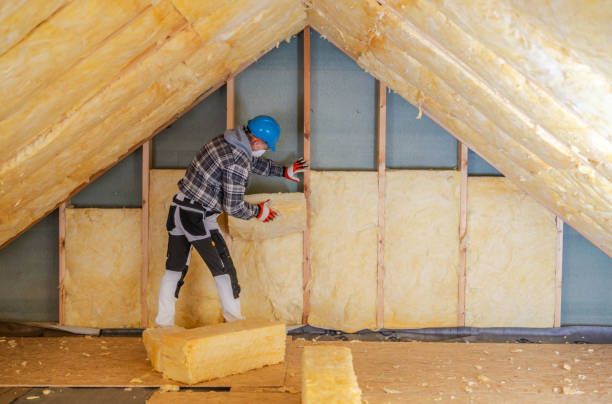
Understanding Home Insulation
Insulation plays an important role in controlling how heat moves through a home. During colder weather, it helps slow heat loss, while during warmer periods it can reduce unwanted heat entering living spaces. Proper insulation can also help create more consistent indoor temperatures, making rooms more comfortable throughout the year.
Finding Areas That Need Attention
Not every part of a home necessarily has the same insulation condition. Attics, exterior walls, floors, basements, and crawl spaces can all affect the home's thermal performance. Older insulation may also have gaps, compression, moisture damage, or areas where coverage is too thin. A professional assessment can help determine where improvements may provide the greatest value.
Understanding Air Leaks
Insulation works best when air movement around it is properly controlled. Small openings around plumbing, wiring, windows, doors, ducts, and other penetrations can allow conditioned air to escape. The EPA recommends addressing air leaks as part of a broader insulation strategy because uncontrolled air movement can reduce comfort and energy efficiency.
Choosing the Right Material
Several insulation materials are available, including fiberglass, cellulose, rigid foam, and spray foam. Each option has different characteristics, installation methods, costs, and suitable applications. Professional Home Insulation Contractors Bronx NY can evaluate the property and recommend materials based on the area's requirements, existing construction, and the homeowner's goals.
Improving Indoor Comfort
Poor insulation can contribute to rooms that feel noticeably warmer or colder than the rest of the home. Adding properly installed insulation can reduce temperature variations and help heating and cooling equipment maintain more consistent conditions. This can be particularly useful in rooms located directly below an attic or next to exterior walls.
Reducing Heating and Cooling Demand
Heating and cooling can account for a substantial portion of household energy use. A properly insulated building envelope reduces the amount of heat that moves through walls, ceilings, floors, and other areas. ENERGY STAR reports that sealing air leaks and adding insulation can provide meaningful reductions in heating and cooling costs.
Protecting Against Moisture
Moisture deserves attention whenever insulation work is planned. Water intrusion, condensation, and poor ventilation can damage insulation and surrounding building materials. Air sealing can also influence moisture movement, so the work should be planned carefully rather than simply adding new material over existing problems. The EPA notes that moisture control is important for protecting building materials and indoor air quality.
Considering New York Requirements
Home improvement work in New York City can involve energy-code requirements, particularly when a property undergoes renovations or major alterations. NYC states that covered projects must comply with the applicable energy conservation code, which includes requirements related to a building's insulated envelope. Homeowners should confirm applicable requirements before starting major insulation work.
Improving the Home During Renovation
Insulation work can be especially practical when other renovation projects already provide access to walls, ceilings, or exterior surfaces. For example, remodeling or re-siding may create an opportunity to improve insulation and air sealing at the same time. Coordinating the work can reduce the need to reopen finished areas later and make the overall project more efficient.
Working With Experienced Professionals
Trusted Home Improvement Contractors Bronx NY can help coordinate insulation with other improvements around the property. Experienced professionals can inspect existing conditions, explain available options, prepare the work area, and install materials according to the project's requirements. Homeowners should ask about materials, installation methods, ventilation, air sealing, and the expected scope before approving the work.
Checking Existing Insulation
Before adding new insulation, the existing material should be assessed carefully. Simply covering damaged or poorly installed insulation may not solve the underlying problem. Contractors may look for gaps, moisture, compressed areas, air leaks, and other conditions that could affect performance. Addressing these issues first can help the new insulation perform more effectively.
Maintaining Proper Ventilation
A well-sealed home still needs appropriate ventilation. Reducing uncontrolled air leakage can improve efficiency, but indoor air must still be managed properly. EPA guidance emphasizes combining energy improvements with suitable ventilation so that indoor pollutants and moisture can be controlled.
Making a Long-Term Improvement
Quality insulation is more than an upgrade hidden inside walls or ceilings. When properly selected and installed, it can support better comfort, energy efficiency, moisture management, and overall building performance. Careful planning, appropriate materials, air sealing, and professional installation can help homeowners get more lasting value from their improvement project.